If you’ve been following the Android tablet scene in India, you already know how popular the Xiaomi Pad 6 was. For almost a year, it was the go-to recommendation for anyone looking for a powerful tablet without spending iPad-level money. I’ve personally suggested it to so many people — from college students to creative professionals — because it was honestly one of the best-balanced Android tablets you could buy.
Now, Xiaomi is back with its new Pad 7, and let me tell you — this one feels like a real step forward. From the moment I unboxed it, I could sense that Xiaomi has listened to feedback and fine-tuned almost everything. But of course, no gadget is perfect. There are still a few “wish it was better” things too.
So let’s talk about everything — what’s new, what’s improved, and whether the Xiaomi Pad 7 truly earns its spot as India’s best mid-range Android tablet.
Unboxing and First Impressions
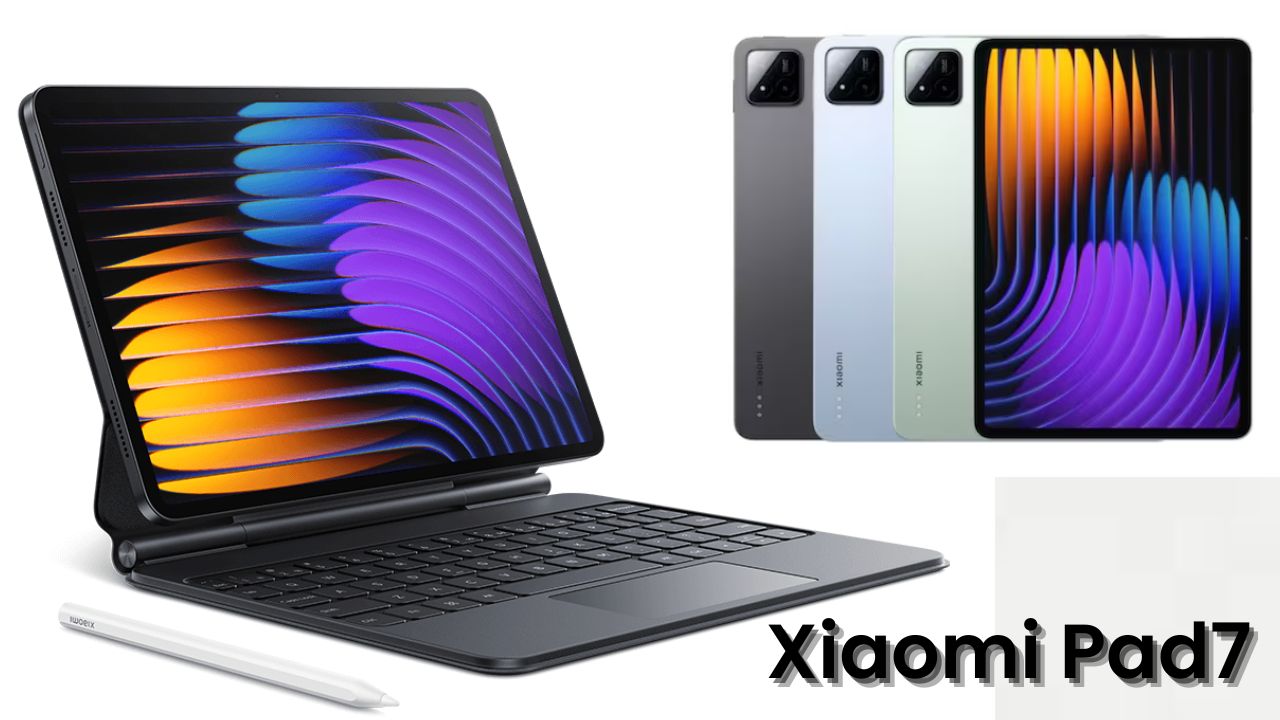
When you open the box, you get the tablet right on top, a 45W charger, and a Type-A to Type-C cable. No surprises there — Xiaomi keeps it minimal but functional. There’s also the Focus Pen and Folio Keyboard Case, which are optional accessories but honestly make the experience complete.
The first thing that strikes you about the Pad 7 is its premium aluminium build. It feels solid yet surprisingly light at around 498 grams. The moment you hold it, you can tell it’s built to last — no flex, no creaks, just clean metal edges and a minimalist look.
And thankfully, Xiaomi didn’t mess with the form factor too much. The tablet still feels manageable even with an 11.2-inch screen, which is right at that sweet spot between portability and productivity.
Display: Bright, Sharp, and Seriously Impressive
The display is where Xiaomi has nailed it again. You get an 11.2-inch IPS LCD panel with 3.2K resolution and a smooth 144Hz refresh rate. The brightness has been bumped up from 550 nits to 800 nits, which means you can easily use it outdoors or in bright Indian sunlight without squinting.
Watching Netflix or YouTube on this display feels incredible. The colors are punchy, viewing angles are wide, and thanks to Dolby Vision and HDR10+, every frame looks rich and detailed.
Plus, the bezels are uniform — not too thick, not too slim — which makes it easy to hold during gaming or watching movies without accidental touches.
Performance: Big Upgrade Inside
Now, coming to the performance — this is where Xiaomi Pad 7 really pulls ahead of its predecessor. The tablet runs on the Snapdragon 7+ Gen 3 chipset, which nearly doubles the performance compared to the Snapdragon 870 on the Pad 6.
Here’s a quick spec table for you to get a clear picture:
| Feature | Xiaomi Pad 7 | Xiaomi Pad 6 |
| Processor | Snapdragon 7+ Gen 3 | Snapdragon 870 |
| Display | 11.2” 3.2K 144Hz IPS LCD | 11” 2.8K 144Hz IPS LCD |
| Battery | 8850 mAh, 45W charging | 8840 mAh, 33W charging |
| RAM | LPDDR5X | LPDDR5 |
| Storage | UFS 3.1 / 4.0 | UFS 3.1 |
| Rear Camera | 13MP | 13MP |
| Front Camera | 8MP | 8MP |
| OS | HyperOS 2.0 (Android 15) | MIUI (Android 13) |
The jump in speed is noticeable. Whether you’re editing photos, taking notes, or multitasking with multiple apps open, it handles everything with ease. Even heavy games like Genshin Impact run smoothly at near-constant 59 FPS.
It doesn’t heat up much either, thanks to efficient thermal management. Xiaomi seems to have optimized the cooling really well.
Battery and Charging: Good, But Could’ve Been Better
Battery life is decent but not mind-blowing. It packs an 8850mAh battery, which gives around 9–10 hours of mixed use — enough for a day’s work, streaming, or study.
The 45W charger is a nice improvement over the older 33W one, and it takes about 1 hour 15 minutes for a full charge.
For the price point, this is acceptable, though I do wish Xiaomi had gone with a slightly bigger cell — maybe around 10,000mAh — since tablets are mostly used for long sessions of binge-watching or creative work.
Audio, Cameras, and Connectivity
The quad-speaker setup with Dolby Atmos is one of my favorite parts of this tablet. It’s loud, crisp, and gives you that immersive stereo sound that makes watching a web series or listening to music feel great.
Cameras are fairly standard — a 13MP rear camera and an 8MP front camera. Don’t expect flagship-level quality, but for video calls, scanning documents, or casual snaps, it does the job.
Connectivity-wise, you get Wi-Fi 6, Bluetooth 5.4, USB 3.2 Gen 1, and an IR blaster. However, there’s no 5G or LTE variant, which might disappoint a few people who wanted standalone internet on the go.
Still, using your phone’s hotspot is a good workaround and works well for most situations.
Accessories: The Real Game Changers
The Focus Pen and Folio Keyboard Case truly complete the Pad 7 experience.
The Focus Pen is smooth, accurate, and attaches magnetically to the tablet for charging — just like Apple’s Pencil. If you love sketching, taking handwritten notes, or marking up PDFs, you’ll love how fluid it feels.
The Folio Case doubles up as a full-size keyboard with a 1.3mm key travel and a nice responsive trackpad. Together, the tablet and keyboard weigh about 1.1kg, making it lighter than most laptops — perfect for those who like to travel light.
You can easily use this combo for office work, writing, or attending online classes. For under ₹50,000 (including accessories), this setup easily replaces a basic laptop for many users.
Software and Ecosystem: HyperOS Brings It All Together
Xiaomi has introduced HyperOS 2.0, based on Android 15, and it feels smooth, fluid, and lightweight. Compared to the older MIUI version, this new OS feels cleaner and more stable.
The best part is HyperConnect, which allows seamless integration with other Xiaomi devices. For example, if you have a Xiaomi 14 or 14 Ultra, you can mirror your phone, transfer files, and even copy-paste between devices effortlessly.
There’s also AI-powered features integrated through Gemini, which makes the tablet even smarter for productivity and creative workflows.
Gaming Experience
If you’re into gaming, this tablet won’t disappoint. The large screen, high refresh rate, and powerful chipset combine beautifully. The Snapdragon 7+ Gen 3 handles games like PUBG New State, Call of Duty, and Asphalt 9 easily.
The 91% CPU stability score means it can handle long gaming sessions without frame drops or overheating — something most mid-range tablets struggle with.
Verdict: Is the Xiaomi Pad 7 Worth Buying?
So after using it for a while, here’s the honest truth — the Xiaomi Pad 7 is easily one of the best Android tablets in India right now.
It nails the basics — stunning display, strong performance, good battery, and great sound — and adds meaningful extras like HyperOS, Focus Pen support, and a sturdy folio keyboard.
Sure, it’s not perfect. The absence of a 5G version and slightly limited battery capacity could have made it an even stronger all-rounder. But for its price (around ₹26,000–₹30,000 for the base variant), it’s hard to complain.
If you’re a student, working professional, or creative user who wants a capable, portable, and affordable device — something that can handle both Netflix and Notion with ease — this is a tablet you’ll genuinely enjoy using every day.
Final Thoughts
The Xiaomi Pad 7 proves that Android tablets can absolutely compete with iPads — not just in specs, but in real-world experience too. Xiaomi has struck that right balance between power, usability, and price, making it a great choice for Indian users.
Whether you’re drawing, writing, gaming, or simply relaxing with a show — this tablet feels like it was designed for you. And that’s exactly what makes it special.