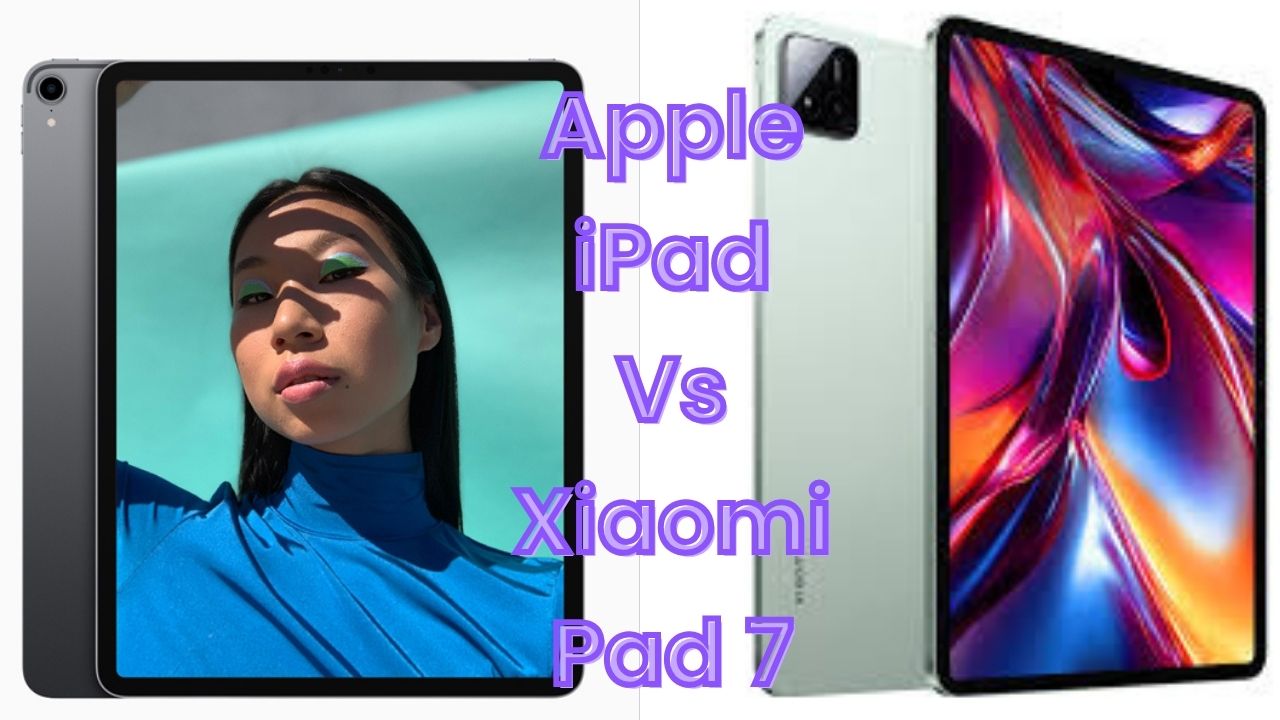
It’s funny how things change in tech. A few years back, tablets were seen as fancy gadgets that only creative folks or business professionals needed. But in today’s India, from school kids attending online classes to MBA students managing notes, and working professionals running their day-to-day tasks, tablets have become a household essential.
Apple has always led this category, and the newly launched Apple iPad 11th Gen has kept that buzz alive. But there’s a twist this year. Xiaomi’s Pad 7 has arrived — not quietly, but with the confidence of saying, “Move over, Apple, it’s my turn now.”
I’ve been using both tablets side-by-side for almost ten days, and trust me, the experience was eye-opening. Let’s talk about what makes each one shine, and where they fall short.
Design and First Impressions: Premium vs Practical
Let’s start with how they look and feel in hand. Apple, as always, nails that first look charm. The iPad 11th Gen has that smooth aluminum unibody, clean edges, and the classic Apple polish we all love. The yellow color variant, especially, feels refreshing and modern — subtle yet stylish.
But here’s the surprise — Xiaomi isn’t lagging behind anymore. The Xiaomi Pad 7 actually feels just as premium, if not better, in hand. The metal back, matte finish, and solid build give a surprisingly expensive feel for the price.
In fact, when I showed both devices to a few friends without telling them which was which, half of them guessed the Xiaomi Pad as the Apple one. That’s how close the design game is this year.
Display Showdown: Brighter, Smoother, Better
Apple’s 11th Gen iPad comes with an 11-inch Liquid Retina display supporting 60Hz refresh rate. It’s sharp, color-accurate, and great for Netflix, YouTube, or even design work.
But once you switch to Xiaomi Pad 7, you instantly notice the smoothness. The 144Hz refresh rate just feels buttery. Whether you’re scrolling, sketching, or gaming, the extra fluidity makes everything feel alive.
Also, Xiaomi offers a 3.2K resolution and up to 800 nits brightness, while iPad sticks to 1.5K and 500 nits. The difference is visible outdoors — Xiaomi’s display looks more vibrant, less reflective, and more readable under sunlight.
Apple’s color accuracy still leads, but Xiaomi’s display simply feels more fun to use.
Quick Spec Comparison Table
| Feature | Apple iPad 11th Gen | Xiaomi Pad 7 |
| Display Size | 11-inch Liquid Retina | 11-inch 3.2K LCD |
| Refresh Rate | 60Hz | 144Hz |
| Brightness | 500 nits | 800 nits |
| Processor | A16 Bionic | Snapdragon 8 Gen 2 |
| RAM | 6GB | 8GB |
| Storage (ROM) | 128GB (base) | 128GB (base) |
| Rear Camera | 12MP | 13MP |
| Front Camera | 12MP Ultra-Wide | 8MP |
| Battery | 8,500mAh | 10,000mAh |
| Charging Speed | 20W | 33W |
| Operating System | iPadOS 18.4 | Android 14 with MIUI Pad |
| Starting Price (India) | 36,000 (32,000 with student discount) | 26,000 approx |
Performance and Everyday Use
Now, performance is where Apple usually dominates — and it does, to a fair extent. The A16 Bionic chip inside the iPad is the same one used in the iPhone 15. Apps open fast, transitions are smooth, and multitasking feels polished. Even with several apps open, the iPad doesn’t flinch.
However, Xiaomi has come prepared. With Snapdragon 8 Gen 2, it matches Apple in raw power. In gaming, especially titles like BGMI or Genshin Impact, the Xiaomi Pad delivers 90fps gameplay effortlessly. The iPad is limited to 60fps, though overall performance consistency feels a touch better on the iPad.
In real use, you’ll barely notice much difference while browsing, streaming, or note-taking. But when it comes to heavy creative apps like Final Cut Pro or LumaFusion, the iPad’s optimization still gives it the edge.
Sound, Multimedia, and Experience
Apple’s speakers have always been top-notch — loud, clear, and rich. But Xiaomi has turned the tables this time. The Pad 7’s quad-speaker setup with Dolby Atmos is easily louder and more immersive. Watching a movie or a cricket match on it feels like sitting in a mini-theatre.
And here’s a cool twist — Xiaomi supports HDR10 and Dolby Vision on Netflix and OTT apps, something the iPad still doesn’t offer. So for entertainment lovers, Xiaomi truly nails it.
Cameras: Front Wins, Back Swings
In tablets, front cameras matter more than the back ones — because most of us use them for video calls and online classes.
The iPad 11th Gen comes with a 12MP ultra-wide front camera, and it’s genuinely impressive. Face detection, color balance, and stabilization all feel natural and professional.
Xiaomi’s 8MP front camera, while okay for casual use, struggles in low light and against backlighting. On the flip side, Xiaomi’s 13MP rear camera captures slightly sharper outdoor shots than Apple’s, though tablet photography isn’t anyone’s top priority.
Battery Life and Charging
Here’s another interesting observation. Xiaomi packs a bigger 10,000mAh battery with 33W fast charging, while Apple uses a slightly smaller 8,500mAh cell with a 20W charger.
However, Apple’s optimization magic still keeps it running longer on screen-on-time. During my tests, both lasted around 10–11 hours of mixed use, but iPad drained slower during standby. So it’s a tie here — Xiaomi charges faster, Apple lasts longer.
Accessories and Ecosystem: Apple’s Undeniable Edge
This is where Apple still stands tall. If you already own an iPhone, AirPods, or Apple Watch, the way everything connects and syncs is just flawless. Notes, calls, AirDrop, Universal Clipboard — all work like magic.
However, accessories are a bit pricey. The Apple Pencil (1st Gen) still needs a separate adapter, and the Folio Case costs extra. Xiaomi’s keyboard and stylus combo is more affordable, though not as precise or polished as Apple’s setup.
Software and Longevity
Apple’s iPadOS 18.4 is stable, refined, and expected to get at least five years of updates. Xiaomi promises only two years of major Android updates and three years of security patches.
So, if you want something that stays relevant for years, iPad still gives more peace of mind. But if you upgrade your devices every 2–3 years, Xiaomi’s offer makes perfect sense.
Price and Value for Money
Here’s the deal-breaker for most buyers.
- Apple iPad 11th Gen costs 36,000 officially, and around 32,000 with student discounts or GST benefits.
- Xiaomi Pad 7 starts around 26,000 and goes up depending on storage and accessories.
If your budget is tight and your usage is more casual — movies, notes, gaming, reading — Xiaomi Pad 7 is unbeatable in value. But if your workflow involves design, editing, or you’re already in Apple’s ecosystem, spending that extra ₹6–8K for the iPad makes sense.
Final Thoughts: Which One Should You Buy?
After using both for almost two weeks, here’s my honest takeaway.
The Apple iPad 11th Gen still feels like a “complete product.” It’s well-balanced, reliable, and built to last. Everything works in harmony — display, battery, software, accessories, and updates.
On the other hand, the Xiaomi Pad 7 feels exciting. It’s faster in many places, looks stunning, sounds amazing, and offers much better value. For students, casual creators, and everyday users, it’s probably the smarter pick.
But for professionals, long-term users, or those already into Apple’s world, the iPad remains the trusted choice.
At the end of the day, it depends on what you truly need — a well-rounded experience or maximum value for money. Either way, both these tablets prove that 2025 is an amazing time to be a tech lover in India.